
Algebrator can Start Helping Solve Your Algebra Homework in the next 5 Minutes!

midnight of October 24th




Here are a few things Algebrator will do for you:
- Solve any problem from YOUR MATH TEXTBOOK (pre-algebra to College Algebra, Trigonometry and Statistics)
- Use the exact same ways your teacher uses in the classroom - yes, it also shows the 'working out'! Just try and see the difference...
- Help you learn math by encouraging you to observe and ask for explanations. All you do is click. Algebrator will help you understand how algebra rules are applied in your problem, just like your algebra professor (only more patient!)
- Cover every math help topic you need: solving equations and inequalities, simplifying expression, graphing, complex numbers, sequences, functions, logarithms, matrices, trigonometry, statistics, and more...
- All problems are entered using an easy WYSIWYG interface (similar to Word Equation Editor), or via a Wizards interface enabling you to enter problems such as "Find line perpendicular to another, passing through a point..."
- Export math solutions to MathML format and share your work! The new export function generates an xhtml file, which can be opened by most browsers.
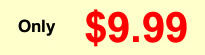
Important UPDATE: You will get 1000's of problems already pre-entered by Algebrator users as an extra bonus if you order before midnight of October 24th
Glossary some regularly used math terms
Parabola:a conic section. The set of points in a plane that are the same distance from a given point and a given line in that plane. The given line is called the directrix, and the given point is called the focus. Grade:- the tilt of a real-life object in relation to the horizontal, often used to determine how steep a hill is Common factor:a number that is a factor of each of two or more different numbers. Graph:A type of drawing used to represent data. Adding integers:To ADD integers with the same sign, add their absolute values. Give the result the same sign as the integers. To ADD integers with different signs, SUBTRACT the lesser absolute value from the greater absolute value. Give the result the same sign as the integer with the greater absolute value. Quadratic equation:A quadratic equation is of the form ax^2+bx+c=0 where a, b, and c are constants. Algebra:Most simply stated in an elementary setting, algebra is the study of generalizations of arithmetic. Rational expression:A rational expression is the quotient of two polynomials. Work:The physics term for the amount of energy required to move an object over a given path subject to a given force. Calculator:What is it? A machine used for computation. Rational expression:A rational expression is the quotient of two polynomials. Algebra:The substitution of symbols and letters for numerical variables and constants. These symbols can be manipulated in the same way as numbers and form the basis for most mathematical calculations. Algebra:the branch of mathematics that uses both letters and numbers to show relations between quantities. Calculator:n. a machine used for computation possibly having computer ability. Trigonometry:Trigonometry is the study of the relationships between the angles and the sides of a right triangle. Variable expression:An expression that contains a variable. Table:Another way of saying times tables. Square root:If x^2 = y. then x is a square root of y. Application:n. a use. Perimeter:The distance around the boundary of a two-dimensional shape. Subtract:Take away one number from another to find the quantity left; represented by the symbol -. Subtraction:What is it? A mathematical operation based on taking away or comparing (How much more?). The number being subtracted is called the subtrahend; the number it is subtracted from is called the minuend; the result of subtraction is called the difference. In 45 12 Least common denominator:the smallest number, other than zero, that is a multiple of 2 or more given numbers. Combining like terms:The process of adding or subtracting like terms. Algebra:Algebra is a branch of mathematics that deals in representing numbers through variables. Algebra also deals with symbols, relations, functions, and equations. Algebra:The branch of mathematics which extends operations, relations, and principles of literal (variable) quantities. Problem:1. n. a question to be answered or considered. EX. Do problems one through six in your books tonight. 2. n. a difficult point or situation or individual. 3. adj. describing a difficult situation. EX. My son is not a problem child. Formula:A formula is a sentence expressed symbolically showing the mathematical relationships among variables. Formula:Rule or method that is accepted as true and used over and over in common applications. Line:A continuous extent of length containing two or more points Equation:A mathematical sentence that uses the equal sign (=) to show that two expressions are equal. Equation:a mathematical sentence (e.g., 2x = 10) that equates one expression (2x) to another expression (10). Fraction:Any number that can be written in the form a/b where a and b are whole numbers and b cannot equal 0. Linear equation:An equation of the form ax+by=c; its graph is a line in the coordinate plane. Problem solving:Solving a problem using mathematics. Chart:What is it? A diagram that illustrates information in the form of a table, graph, or picture. Inequality:A mathematical sentence comparing two quantities that are not equal is called an inequality. Decimal:Based on 10 Example: the numbers we use in everyday life are decimal numbers, because there are 10 of them (0,1,2,3,4,5,6,7,8 and 9). Often "decimal number" is also used to mean a number that uses a decimal point followed by digits as a way of showing values less than one. Example: 1.9 is a decimal number (one and nine tenths) Simplify:To use the rules of arithmetic and algebra to rewrite an expression as simply as possible. Simultaneous equations:See under system of (simultanwous) equations. One step equation:An equation or inequality that can be solved in one step or action. First order differential equation:An ordinary differential equation of order 1. That is, a differential equation in which the highest derivative is a first derivative. For example, y' + xy = 1 is a first order differential equation. Algebraic expression:An expression that contains a variable alone or with numbers and operation symbols. Subtraction:an operation that tells the difference between two numbers or how many are left when some are taken away. Algebra:Algebra is the branch of mathematics that uses letters, symbols, and/or characters to represent numbers and express mathematical relationships. Those symbols are called variables. Fraction:Fractions are rational numbers which a ration of an two integers a/b (b cannot be 0). You can think of fractions as dividing a pie into pieces. Each piece of pie is a fraction of a pie. The bottom number b (the denominator) divides the size of the piece of pie and the top number (a) defines how many pieces of pie you have. Calculator:What is it? A machine for performing arithemtical calculations. Radical function:Any function whose equation is also a radical equation. Differential equation:A differential equation is an equation involving the first or higher derivatives of the function to be solved for. If the equation only involves first derivatives it is called an equation of order one, and so on. If only n-th powers of the derivatives are involved, the equation is said to have degree n. Equations of degree one are called linear. Equations in only one variable are called ordinary differential equations to distinguish them from partial differential equations. Square root:8 is called a square root of 64 because 8 x 8 = 64. But -8 is also a square root of 64 as -8 x -8 = 64. Every positive number has two square roots, one positive and one negative. 841 let say has 29 and -29 as its square roots because 29 x 29 = 841 and -29 x -29 = 841. In general m is called a square root of a number N if m x m = N, and then it will always be true that -m is also a square root. The Notation ??N can be used for the positive square root of a number. Note that the positive squa Negative integer:Any integer less than zero. Rational expression:An expression with fractions, especially when there is a variable in the denominator. The variable can not make the denominator equal to zero. Algebra:What is it? Algebra is the branch of mathematics that uses letters, symbols, and/or characters to represent numbers and express mathematical relationships. Those symbols are called variables. Super:A prefix that means that a mathematical structure is analogous to supersymmetry. Typically these structures have commuting and anticommmuting variables that are placed on an equal footing. For example, a supermanifold has anticommuting supercoordinates along with the usual commuting coordinates of its coordinate charts. Simple fraction:A fraction where the numerator and denominator are both integers. Also known as a common or vulgar fraction. Algebra:Algebra is the study of generalized arithmetic. In algebra, unknown numbers can be represented by letters in order to solve equations. For example, 4 + x = 10 is true for x=6. Algebra (originally called al-jabr, meaning "restoration") was invented in the Middle East by Abu Ja'far Muhammad ibn Musa Al-Khwarizmi (born in Baghdad about AD 825) during the Middle Ages. Exponent:a small figure placed to the upper-right of a number showing the number of times to multiply that number by itself Factoring:Finding what to multiply to get an expression. (Called Factorizing in British English.) Example: 2y+6 = 2(y+3), so the factors of 2y+6 are 2 and (y+3) Square root:The square root of x is the number that, when multiplied by itself, gives the number x . Algebra:area of math dealing in representing numbers with letters Math:The grammar of size (amount), shape, and/or order. (according to Lancelot Hogben in Mathematics for the Million) The study and description of patterns A way to describe measurements of reality in symbols There are many other ways to define, describe, and use math. No one can name them all, but it is fun and deeply satisfying to investigate them. Algebra:The study of equations using variables. At Capitan High School, the study of algebra is broken into Algebra 1 and Algebra 2. Expression a:collection of constants, variables, symbols of operations, and grouping symbols. Percent:A ratio or fraction where the denominator is always assumed to be 100. Equation:a balanced relationship between numbers and/or symbols. A mathematical sentence. Absolute value:The distance of a number from zero on a number line. Since distance is always thought of as positive, the absolute value of any number is always positive. Algebra:What is it? A branch of mathematics in which variables are substituted for unknown values to solve a particular problem. Solve an equation:To find the value of a variable that makes an equation true. Step function:A step function is a special type of function whose graph is a series of line segments. The graph of a step function looks like a series of small steps. Radical:A square root sign or any other root, like a cube root or fourth root. Algebra:area of math dealing in representing numbers with letters Expansion:- a size change where k is greater than 1 Trig substitution:A method for computing integrals often used when the integrand contains expressions of the form a^2 ?C x^2, a^2 + x^2, or x^2 ?C a^2. Simplifying:Reducing to lowest terms. Subtraction:The inverse of addition. Algebra:An algebra is a set which is both a ring and a vector space satisfying, of course various special properties or axioms. Algebra:a language that helps translate real-life situations into mathematical form so that we can analyze change and answer the question "What if? Variable:A letter used to represent a number whose value may change. Multiply:to find the product of by multiplication. Multi step equation:An equation or inequality that requires two or more steps to solve. Linear combination:An equation that is formed by adding multiples of two equations together. |